Sunday, February 15, 2015

What's new--Harold the Bear?

Harold the Library Bear makes his triumphant return!
Hedgesville, WV – After a long hiatus while he settled into his new position at the new Hedgesville Public Library building, Harold the Library Bear has announced that he will be resuming his weekly duties as the Voice of the Library.

“It’s been a long time,” Harold said, “Between running last year’s summer reading program and supervising the move into our new building, I’ve been swamped!”“But that’s the price I pay for being the official Library Bear,” Harold continued. “I’m very much in demand.”

When asked what he’d been up to the last few months, Harold had good news.

“I’ve had a great time getting everything just right in my new library,” he said, “and the staff that works out here is great! They’re always giving me new clothes to wear. I’ve gotten so many new outfits, I don’t have room in my closet!”

“Plus,” he added, “I’ve met so many new boys and girls since we moved, and I get to play with them every day!”

“But Friday is my favorite day,” Harold decided. “Friday morning at 10:30 is when we have our preschool story time, and I usually end up as a chair for the boys and girls while they hear a story! I can’t wait to see them all again!”


-Harold the Library Bear is a bear, so he doesn’t have a phone, but you can leave him a message at (304)-754-3949 or you can meet him Monday-Saturday in the Children’s Department of the new Hedgesville Public Library. His column appears every week on the Martinsburg-Berkeley County Public Libraries blog.

Saturday, February 14, 2015

What's new


The Encyclopedia of Diversity and Social Justice--Review


An excellent and timely title that has been recently added to the print reference collection at the Martinsburg Public Library is The Encyclopedia of Diversity and Social Justice (call number R 305.8003 Encycl).

The Encyclopedia of Diversity and Social Justice contains over 300 entries alphabetically arranged for straightforward and convenient use by scholars and general readers alike. This reference is a comprehensive collection of designated entries that describe, in detail, important diversity and social justice themes. The compiler, assisted by a network of contributors and consultants, has provided a centralized source and convenient way to discover the modern meaning, richness, and significance of diversity and social justice language, while offering a balanced viewpoint.
Examples of entries in this two-volume set include:  Accessibility, African American, Antiracism, Biculturalism, Chicano, Colorism, Desegregation, Diversity Management, Ethnocentrism, Glass Ceiling, Hispanic American Cultures, Intolerance, Juneteenth, LGBT Rights, Melungeons, Nonviolent Civil Disobedience, Protestant Ethic, Racial Identity, Social Justice, Terrorism, Urban Culture, and Worldview. The terms in this set have been carefully chosen to present the common usage of words and themes that dominate our daily lives.

The essays in each entry provide alternative views to popular doctrines and philosophical truths, and include many of the most popular terms used in current conversations on the topic, from ageism to xenophobia. With contributions from experts in various fields, the entries consist of topics that represent a wider context among a diverse community of people from every walk of life.


Tuesday, February 10, 2015

What's new?--Book Clubs

What about Book Clubs?


Book clubs have gained popularity in recent years. There are book clubs for all ages - even preschoolers. Preschoolers come to the library for a story and craft time. This can be a start for a lifelong love of reading. As children begin to read for themselves, they can participate in book discussions for their age group.

There are many benefits of being in a book club for school aged students:
·         Participants generally have higher grades
·         Participants have better language and literary skills
·         Participants use conversation to increase reading and vocabulary comprehension
·         Conversation allows new ideas to be presented and different perspectives to be formed.
·         Participants can make new friends
·         Participants can develop critical thinking through questions and answers.
·         Discussion fosters creative thinking and writing skills
·         Book Clubs expose students to a variety of genres

Adult books groups are also growing in popularity.  According to the Good Read website approximately 5 million people are involved in a book group. Some are purely for social reasons and others are for discussion. Regardless of the reason, there is a love of reading, whether it is the latest best seller or a nonfiction book.  There are three things that a book group does for people:
·         Book groups push participants outside of their comfort zone. Participants may read a book that they would not normally pick up.
·         Book groups promote discussion and analysis.  Every person has a different opinion and it can be expressed in a non-threatening situation.
·         Book Groups promote active reading.

The Martinsburg-Berkeley County Public Libraries offer book discussions for all ages.  Call or stop by a branch near you to see what book we are reading next.


-Molly Brady and Dawn Weber

Monday, February 9, 2015

From the Director's Chair --February 2015

From the Director’s Chair
with Pam Coyle...


Although T. S. Eliot called April the cruelest month, February is possibly the dreariest. Usually cold, with little to do and less ambition to do it, you can become depressed if you have SAD (seasonal affective disorder) or don’t have a sweetie for Valentine’s Day, in financial trouble because you overspent on the holidays or owe the IRS, and disappointed if you have abandoned all but the easiest of your January resolutions.
Tell me something I don’t know, you say?
February is also Library Lover’s Month—a reason for rejoicing in my opinion. Find a way to convey your love of libraries to your legislators and other elected officials. Most people know that this month is Black History Month as well—come in to view the display done by our own Tamesa Hampton. This display and accompanying bibliography illustrate this year’s Summer Reading Program themes of Every Hero has a Story and Escape the Ordinary. Read about people who exemplify these qualities.
Other less known celebrations are associated with February. From National Blah Buster Month to Return Carts to the Supermarket Month to International Twit Award Month, February offers unique opportunities to put fun in your life.
On February 16th, do a grouch a favor, it is the one day of the year designated for this purpose; you can have a tooth ache on February 9th; on February 28th, you can observe Public Sleeping Day—just don’t wake up your boss with snoring or do it in the library.
The library can help you find this entire trivia and more to amuse yourself and your family on cold days and nights when you don’t want to move from your warm and cozy homes. You may want to put this trivia to good use by forming a “Brain Game” team and joining other teams to support Literacy efforts in the Eastern Panhandle in April.  For more information call the Literacy office at 304-264-0298.
Although the library is a source of serious information from tax assistance [See article in this newsletter] to how to fix broken pipes, it is also a place where you can lose yourself in other worlds with science fiction and fantasy books, travel to other countries without leaving home, and enjoy the humor and foibles of other people through fact and fiction.
Yes, February can be a dreary gray month but it also can be the month you take time to explore different worlds, different times and different people either by coming to the library or searching our reference section of databases on our homepage.
-Pam Coyle, MBCPL Director


What's new--View from the computer lab

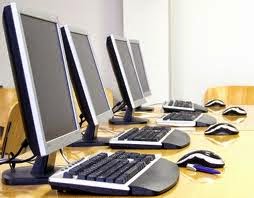
            View from the Computer Lab


An average day at the computer lab is on its best days is a flurry of questions and answers with a few dead zone rest periods in between where all goes silent.  There are others where there are no breaks and the only dead zone is about twenty minutes before the lab closes meaning you have about ten minutes before all of the stragglers try to jump on for last minute printing.

My previous job was at a college library in Maryland similarly answering technical questions and keeping an eye on the computers. In comparison, the systems are a bit older and the computers need a bit more love to function properly. I also manage about half of the computers I used to for twice the amount of time sessions, but also running the print jobs, Wi-Fi connections and just general maintenance it’s easy to keep busy.

What I found I like absolutely best about working in the Martinsburg library computer lab however, is the appreciation and look of happiness on people’s face as they’re able to accomplish something they otherwise could not, be it getting on social network just to relax and give their mental state a breather to completing a job application or tax forms that are a necessity. 

What’s considered so little and a right to young adults who have grown up with technological access and take that privilege for granted, is a gift to people who haven’t the same advantages in life.


~ Treena