Showing posts with label Martinsburg. Show all posts

Wednesday, October 21, 2015

WV Wills Week--Library resources


Wills, Trusts, and Advance Directives

The Reference Department at the Martinsburg Public Library has resources that can help you make choices about wills, trusts, advance directives, and end-of-life decisions.

Since we never know when an accident or a serious illness might leave us incapable of making our own decisions, making the choice to have these documents in place can save the persons whom you love and for whom you care a lot of stress during trying times.

Having  a will versus dying “intestate” (without a will) means a lesser chance that there will be a conflict between family members and survivors of the deceased, since the will sets forth clearly the manner in which property and assets should be divided following your death.  To be legal, a will should not be witnessed by persons who will benefit from its provisions (including a spouse) and it should have all signatures, including those of the testator (maker) and all witnesses, attested to by a notary public.  A trust is another option, which provides for control of property or assets over an extended period of time while transferring ownership through the terms of the document. 

Other documents, known as advance directives, let your family and doctor know your decisions for health care if you become unable to make those decisions for yourself. The state of West Virginia recognizes two types of written advance directives, which are a Living Will and a Medical Power of Attorney.

The library has books providing further details about these documents and copies of all of these types of forms which you can use to complete these important decisions that will make a difference to the people you love.

Some important titles of interest on the legal bookshelf in the Reference Department include: 


Estate Planning in West Virginia: Real Answers to Real Questions
Estate Planning Basics
Nolo’s Simple Will Book
Prepare Your Own Will
Plan Your Estate: Protect Your Loved Ones, Property & Finances


Thursday, October 1, 2015

Composting with Melanie Files

Bibliography:

628.162 Alle.L    
Allen, Laura
The water-wise home: how to conserve, capture, and reuse water in your home and landscape.(2015)
631.875 P7241 
Pleasant, Barbara
The complete compost gardening guide.(2008)
631.875 Pear.P
Pears, Pauline
The Garden Organic guide to making compost: recycling household and garden waste. (2009)
635.0484 Mart. D
Martin, Deborah
Rodale's basic organic gardening.(2014)
635.048975 Davi.S
Davies, Stephanie
Composting inside and out: to fit our space & lifestyle.
640 Hoff. N
Hoffman, Nancy
The self-sufficient home: how to provide for your family and prepare for the unexpected.(2014)
J631.8 Lay.R
Lay, Richard
A green kid's guide to organic fertilizers.(2013)
J631.875 Lay.R
A green kid's guide to composting.(2013)
YA--On Order
Hanson-Harding, Brian
Composting: turn food waste into rich soil.(2014)

Peanuts films at Martinsburg Library


Library Exhibits during the month of October

Library Exhibits during the month of October


October 2 is the 65th anniversary of the 1950 debut of the Peanuts comic strip.  This comic strip by Charles Schulz featured Charlie Brown, Lucy, Linus, Sally, and Charlie Brown’s dog, Snoopy.   The library will celebrate with an exhibit of Peanuts collectibles and memorabilia in one of the display cases in the front foyer of the library.  “A Boy Named Charlie Brown,” the first full-length animated motion picture from 1969 featuring these loveable characters, will be shown in the Young Adult section at the Martinsburg library on Saturdays Oct. 3 and 24 from 12:00 to 1:30pm and during a Peanuts Film Festival in the Children’s Department on Saturday, Oct. 17 from 11am to 3pm.  Additionally, “It’s the Great Pumpkin, Charlie Brown” will be shown after the Children’s story time on Saturday, Oct. 31 at 10:30am.


An exhibit previewing the Trails and Trees Studio Tour of artist studios in Berkeley County on the weekend of November 7 & 8 will be featured in the other front foyer case. The Trails and Trees Studio Tour is an opportunity to leisurely roam the scenic back roads of historic Berkeley County WV and visit the studios of the talented artisans that call it home. The Tour is free and you travel at your own pace from studio to studio to get a behind-the-scenes look at the creative process and a chance to chat with the artists and learn about their special talents and skills.


 Apple Harvest Festival programs and memorabilia will be on display in the round carousel case on the main floor of the library. This year’s celebration on the weekend of October 15-18 marks the 36th annual Mountain State Apple Harvest Festival in Martinsburg. The Apple Harvest festival had origins in apple carnivals which were held in Martinsburg from 1909 to 1913 and the first “official” Apple Harvest Festivals which were held from 1935 to 1940. The festival was revived again in 1980 and has run up to the present year.


A selection of scary books will be featured in the Popcorn machine space to put you into the “spirit” for the autumnal harvest and Hallowe’en ghost stories.

October 1 is the birthday of Firepup (who teaches children about fire and burn prevention and life safety awareness) associated with the National Fire Safety Council, so one of the table display cases will have an exhibit about fire safety in our homes.


Wednesday, September 16, 2015

Some Quick Computer Commands


Just a simple guide for some quick commands.


Generic Hot Keys

Quick Printing: “Ctrl” + “P”
Copy: “Ctrl” + “C”
Cut: “Ctrl” + “X”
Paste: “Ctrl” + “V”
Undo:  “Ctrl” + “Z”
Open: “Ctrl” + “O”
Select All: “Ctrl” + “A”
System Menu: “Alt” + “Ctrl”
Move Forwards One Item: “Tab”
Move Backwards One Item: “Shift” + “Tab”
Hold “Shift” + “Right” or “Left” arrows to highlight one character or more in either specified direction.
Hold “Shift” + “Up” or “Down” arrows to highlight entire rows in either specified direction.
Hold “Ctrl” + “Right” or “Left” arrows to move quickly between words.
Hold “Ctrl” + “Up” or “Down” arrows to move to the beginning of the last or next paragraph.
Hold “Ctrl” to be able to highlight many individual things at once.
Hitting the “SPACE BAR” on any internet page is a quick way to scroll down without having to navigate with the mouse.
Chrome Hot Keys
New Window: “Ctrl” + “N”
Reload Page: “F5”
View History: “Ctrl” + “H”
View Downloads: “Ctrl” + “J”
Stop Page Loading: “Esc”
Find In Page Search Box: “Ctrl” + “F”
Make Text Larger: “Ctrl” + “+”

Make Text Smaller “Ctrl” + “-“

Fire in Martinsburg on September 16, 1912--Read all about it!


This Month in Local History, September 16, 1912

On September 16, 1912, Martinsburg publication “The Evening Journal” reported on the destruction of a local industry that occurred on the previous day.  West Virginia experienced the loss of the Stewart Vehicle Plant which is cited as one of the largest vehicle industries in this part of the country at that time.  The blaze destroyed hundreds of vehicles along with industrial materials that were stored in the facilities.  Firefighting tactics were described in their valiant attempts to contain the blaze, and the fire was reported to be visible from Hagerstown and surrounding areas.

This historic news story and many others can be accessed from the extensive local historic publications maintained at the Martinsburg Public Library.  This headline appears in the Martinsburg publication “The Evening Journal”, which began publication in 1907.  The Microfilm Collection includes newspapers of Berkeley, Jefferson, and Morgan Counties in West Virginia from 1791 to present. Copies may be printed from a microfilm reader at the cost of 10 cents per copy or page images may be transferred onto your own USB drive at no cost.

Saturday, August 22, 2015

Medical Dictionaries


Medical Dictionaries

Medical terminology can be hard enough for medical students to learn, let alone anyone else. Say your doctor has told you that you should begin taking a particular drug. You want to know more information about what the drug is for, how to take it, and whether there are any side effects that you should know about. Maybe you weren't expecting to need a new medication, and you forget to ask your doctor some of the questions you have. When you call his office, he's unavailable. Is there a way to find out what you need to know?

"The Physician's Desk Reference" is one resource that we keep to help with questions like this. It is kept behind the reference desk so that the librarian there can pull it out quickly for people who have questions about prescription medicines. Maybe you are curious about Eliquis which you are supposed to begin taking to prevent you from having a stroke. You come to the library, ask for "The Physician's Desk Reference," and look up your new medication. You glance over the recommended dosage, and you read the side effects. One is "bleeding," which seems straightforward. But the first side effect is "Increased risk of thrombotic events after premature discontinuation." You stop and stare--and stare some more.

What should your first step be? You can look up medical terms on the internet, of course, but having an authoritative source of information is important--this medicine is going down your throat, after all. If you want a source that you know you can trust, your safest bet might be a medical dictionary.

Medical dictionaries only include words that are related to medical and health topics. Many medical dictionaries include illustrations to help you understand what a condition (warts, anyone?) looks like. They include common medical terms like "arthritis," offering specific definitions of different varieties of the condition. And then there are the extremely unfamiliar terms. "Under "A," you can find words like "apraxia," "arcus senilis," and "avulsion." Under "Z," you can find "zeolite," "zonulitis,"
and "zygoma."
 

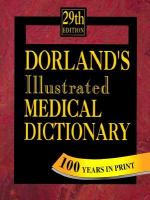
Some of our medical dictionaries are available in the reference section, but others can be checked out. For a reference book with some good illustrations, try "Dorland's Illustrated Medical Dictionary." Or, if you would like to take a medical dictionary home, a copy of "Taber's Cyclopedic Medical Dictionary" is available for checkout in out nonfiction section.

Tuesday, August 18, 2015

Baseball--100 years at Martinsburg High School

Baseball--100 years at Martinsburg High School


This year marked the 100th anniversary of baseball at the Martinsburg High School.   An exhibit of items related to the commemoration of that accomplishment will be on display in one of the front foyer cases at the Martinsburg Public Library during the month of August. 


Martinsburg High School formed their first baseball team in 1915 so to document the 100 years, there is a special commemorative edition booklet that was created and includes all available Bulldog baseball team photos throughout the years as well as the Alumni game participants.  Pre-sales are being taken by Larry and Anita Cooper at a cost of $5.00 and checks are to be made payable to MHS Baseball Boosters.   A pre-order list (but no payments) is also being taken at the Martinsburg-Berkeley County Public Library through the end of September 2015. Those persons will be contacted by the Coopers to obtain their copy of the book.   Mini-helmets and commemorative baseballs like those in the display case are also available from the anniversary committee.
 

Please stop to look at this interesting exhibit which celebrates one of America’s favorite sports and baseball at Martinsburg High School in particular!!

submitted by Keith Hammersla

Monday, August 10, 2015

HISTORICAL TREASURES IN THE LIBRARY:  ANTIQUE BOOK CAROUSEL


The antique Arts and Crafts-style revolving oak bookcase on the top floor of the Martinsburg Public Library was once located in another building which previously stood on the same spot as the library over 100 years ago.

The revolving bookcase, or book carousel, belonged to the Martinsburg Public Library Association, founded by Newton D. Baker in 1897 and housed in two rooms on the second floor of the Flick Building (later known as the Wiltshire Building) on the southwest corner of the public square, which became the site of the present Martinsburg Public Library in 1967.  (The fireplace mantel in the central area on the top floor of the library was also a fixture from the Wiltshire Building.)

The carousel, over 6 feet tall and shaped like an oriental pagoda with a peaked shake “roof,” is carved with heraldic shields and subject categories (history, politics, poetry, art, science, travel, religion, fiction, biography, mechanics, commerce, sociology).   The name of the Tabard Inn, carved on one side of the bookcase, is a reference to the famous inn which was located in Southwark near London, the traditional starting place of the pilgrims in the prologue of Geoffrey Chaucer’s Canterbury Tales.  An inscription going around all four sides along the top reads as follows:  “The Best Reading Rooms in the United States are the Homes of the American People.”


The Tabard Inn Library was a membership library founded by Seymour Eaton in 1902.  Revolving bookcases were placed in drugstores, hotels, public libraries, and other commercial establishments throughout the United States. After paying an initial life membership of $3, members could exchange books on any revolving bookcase for an additional 5 cents which was deposited into a compartment in the bookcase. However, the library scheme was short-lived, ending when Eaton was declared bankrupt in March 1905.

The bookcase was moved with the library when the early Martinsburg library changed its location to the corner of West King Street and College Streets around 1905 and then again in 1910 when the library was moved into the John Street School.  Afterwards, due to the lack of support and funding, the library was closed in less than a year after that final move.  A public library did not exist again in Martinsburg until 1926.


The book carousel remained in the attic of the John Street School for over 50 years until the current public library was opened on the town square in 1968. Through the efforts of Mrs. Madeline Miller Griffith, a teacher at the John Street School, it was returned in 1969 to the new public library building where it has found its permanent home.


Saturday, July 18, 2015

Biographies at the Library

Biographies at the Library


A lot of people like reading about people. That's one reason that the library's fiction sections are very popular. But what if you prefer factual books about real people? Where should you look?

If you would like to browse, then you can head up to our biography section, which is located on the second floor of the library. Biographies are shelved in the 920s and 921s. Books in the 920s tell about the lives of more than one person. Sometimes the people are a couple (e.g., "Elizabeth and Philip:
The Untold Story of the Queen of England and Her Prince" by Charles Higham and Roy Moseley), are members of the same family ("The Fitzgeralds and the Kennedys," by Doris Kearns Goodwin), or share something else in common, such as the same profession ("Women of the
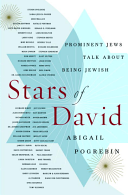
World: The Great Foreign Correspondents" by Julia Edwards), or same ethnic group ("Stars of David: Prominent Jews Talk About Being Jewish" by Abigail Pogrebin).

Individual biographies are located in the 921s. These are arranged by last name, so if you are interested in biographies about a specific person (say, Thomas Jefferson), you can go to the 921s and then look for their name (the spine labels for books on Jefferson start with 921 J).

What if you don't find the person you are looking for in the 921s? First of all, search for their name in our online catalog. Sometimes books have information about the life of a person but don't quite qualify as biographies. This can be especially true for celebrities or sports figures--"Elvis Presley: A Southern Life" is located in the 921s with the other biographies, while "Elvis: The King Remembered" is in the 782s.


If you are having difficulty finding what you are looking for, just ask at the reference desk. The librarian there can help you track down a book, find an encyclopedia with biographical information, or--if the library does not have any information on the person you are interested in--order a biography through interlibrary loan.

submitted by Elizabeth Johnston

Saturday, July 11, 2015

Medical Dictionaries


Medical Dictionaries


Medical terminology can be hard enough for medical students to learn, let alone anyone else. You can look up medical terms on the internet, of course, but what if you have a long list of terms you need to understand? What if having an authoritative source of information is important, and you don't have the time to search everything individually? In that case, a medical dictionary might be your best bet.

Medical dictionaries only include words that are related to medical and health topics. Many medical dictionaries include illustrations to help you understand what a condition (warts, anyone?) looks like. They include common medical terms like "arthritis," offering specific definitions of different varieties of the condition. And then there are the extremely unfamiliar terms. "Under "A," you can find words like "apraxia," "arcus senilis," and "avulsion." Under "Z," you can find "zeolite," "zonulitis," and "zygoma."


Some of our medical dictionaries are available in the reference section, but others can be checked out. For a reference book with some good illustrations, try "Dorland's Illustrated Medical Dictionary." Or, if you would like to take a medical dictionary home, a copy of "Taber's Cyclopedic Medical Dictionary" is available for checkout in our nonfiction section.


Submitted by Elizabeth Johnston

Saturday, June 27, 2015

HISTORICAL TREASURES AT THE LIBRARY, PART 4 MOBILE ART

HISTORICAL TREASURES AT THE LIBRARY, PART 4


MOBILE ART


     Some interesting art mobiles are on permanent display in the Martinsburg Public Library.  The four mobiles, three of which are located in the Children’s Department and one in the Adult Department, were created by the same artist, Howard Connor, and were donated by him to the library in memory of his mother-on-law, Mrs. Roy W. (Mary) Hollis, who was a former local resident.       Some of his mobiles have been sold in art galleries in New York City and have been featured in issues of “House Beautiful” magazine.


The mobile in the Adult Department is called “Perpetual Motion.”  It is constructed of light-gauge piano wire and multi-colored plastic disks.  The mobile was made perfectly balanced, so that the wires never tangle, and it moves smoothly and lightly, if caught by a soft breeze when someone walks past it.  


This mobile has a twin, almost identical mobile, in the Children’s Department.  These mobiles were donated to the library in 1973.


Two newer mobiles are also located in the Children’s Department.  They are a butterfly mobile and a fish mobile, made similarly but with shapes of butterflies and fishes at the end of the wires.  Mr. Conner, feeling that his disk mobiles no longer reflected his best work, donated the two new mobiles, in his mother-in-law’s memory also, to the Children’s Department in 2001.


Thursday, June 11, 2015

Windows 10--the wait is over!

Updates are almost here!
      The Windows 10 update is almost here. It will be released to the public July 29. This update will be revered by some and dreaded by others, depending on how attached the person is to their old processor. Many who have updated to Windows 8 are crossing their fingers in hope that the new update remembers how to computer. Sure, app interfacing can be nice, but it’s a hassle with a mouse.


       Many Grumpy impersonators (like me) have found their way to the desktop app and parked themselves there grumbling to avoid half-finished apps that already have superior versions on desktop mode. Adding to that, the app functions also heat up the computer much faster than the desktop interface as well. While its new interface boasts about quickly moving between programs with ease, this function does no good when keeping those programs open could potentially fry the hard drive. These are just a few of the problems that users hope will be rectified with the new update as they advertise that Windows 10 as combining the strengths of Windows 8 with Windows 7. (Windows Insider)

      Many of the changes that will come with the new update are not entirely clear. Microsoft has released their new help program “Cortana2” which appears to be Microsoft’s late response to Siri. They also talk about “snapping” apps into place, supposedly to make it easier to multitask and see multiple programs at a time. It looks like Microsoft is trying to take a step back and remember that Windows 10 will be used mainly on desktops and laptops without losing its app-like functionality; basically the functionality of Windows 7 with some of the pretty, modern abilities of Windows 8.

Side note: to all gamers, Xbox is coming to Windows. 

Submitted by Katrina Stracke

Tuesday, June 9, 2015

Page to Screen--The Hobbit

Page to SCREEN  


Free Movie Nights @ Martinsburg Public Library


Tuesdays, June 2, 16, 30 @ 6pm


SEE ALL 3 MOVIES


Saturday, June 6, 2015

CELEBRATE ODDFEST: WEIRD, WILD, AND WONDERFUL WEST VIRGINIA

ODDFEST:  WEIRD, WILD, AND WONDERFUL 
WEST VIRGINIA


         In celebration of Oddfest WV (on the weekend of June 27-28), the Martinsburg Library will be having an exhibit of unusual items in the front display cases for the whole month of June.  Persons visiting the library will have the opportunity to fill out a contest form and guess what each of these items is.  At the end of the month, we will find out who has given the most correct answers!


         A selection of books about West Virginia and some of the many things that make it unique will also be on display in the front cases.  Stop by the West Virginia shelf on the top floor of the library to browse a large collection of other circulating books about our wonderful state, its people, and its history.  

         Please help us to celebrate West Virginia Day (the anniversary of the date on which West Virginia became a state--June 20) and Oddfest WV (June 27-28) by visiting the library to test and increase your knowledge!

Wednesday, June 3, 2015


A Piano in the Library

An unusual piece of furniture to find in a library is a piano. One can find such a thing in the Martinsburg Public Library--on the mezzanine, or top floor, of that library you will find a Yamaha C5 conservatory grand piano, which was probably manufactured in the late 1970s.

In 1887 Torakusu Yamaha (1851-1916) repaired his first reed organ. Fifteen years later, in 1902 his company produced their first grand piano. Since then, the Yamaha Corporation has produced various collections of grand pianos; each of them is aimed to specific needs. The conservatory piano collection (also known as the C series) is specially produced for music schools and conservatories. The C series is known for its improvements in both resonance and expressive control.  The Yamaha C5 is one of the most popular grand pianos placed on main stages of conservatories and other music schools.


The Yamaha piano in the library was purchased by the library board around 1980 for musical events at the library.  Over the years, a number of piano concerts have been presented by musicians whose skills have ranged from professional pianist to budding piano student.  The library attempts to host at least two piano events during each year—usually a spring concert in April and a holiday concert in December.

Saturday, May 23, 2015

Specialized Encyclopedias

Specialized Encyclopedias


Let's say your teacher gave you an assignment to research African food. You scroll through the library's computer catalog, hoping to find a book on the topic. You notice one book that mentions African food, but it turns out to be a book of recipes--not the sort of thing your teacher wants you to find.

You go to the next page in your search, and suddenly all the books are on cheetahs and elephants. Not very helpful. You need this information--soon.
What do you do?

Or imagine that you want to learn more about Nigeria, since conflict there has been in the news. You saw an article mention that the Igbo are a major ethnic group in Nigeria, and you would like more information about them, so you check the library catalog. All the results are either picture books or fiction. Should you give up?

One solution to your problem can be found in the reference section on the second floor of the library. We have encyclopedias on a number of different specialized topics, including Africa. The Encyclopedia of Africa includes information on countries, tribes, and individuals, as well as articles on more general topics, such as African food. The Africana encyclopedia includes articles on both African and African-American topics. If you are curious about an Africa-related subject that bridges continents, then this is the encyclopedia for you. And those are only two of the reference books that focus on Africa. The reference section includes many more.

Don't give up on learning about a topic at the library just because it doesn't show up in the catalog. Ask whether any reference books might cover the topic. Most likely there is a book in the reference section that will answer some of your questions.


--Submitted by Elizabeth Johnston

Saturday, May 16, 2015

HISTORICAL TREASURES AT THE LIBRARY, Part 2


HISTORICAL TREASURES AT THE LIBRARY, Part 2


An historical treasure in the Martinsburg library is an 1889 popcorn vending wagon located at the entrance into the adult library. The wagon was made by the Kingery Manufacturing Company of Cincinnati, Ohio.  It belonged to George Ashton, a street vendor who sold popcorn every night (except Sundays) for many years on the corner of Burke and Queen Streets from around 1910 through the mid- 1950s.  

Saturday nights were the best time for business since stores were open and the downtown was bustling with people, so Ashton sold popcorn at every intersection along Queen Street on those nights. From when he first opened his business, and until the start of World War II (when there was a scarcity of them), Ashton also sold peanuts, cracker jacks, chewing gum, and penny candies. Many older members of the Martinsburg community might remember buying popcorn downtown from him or one of his helpers on a Saturday night.


The wagon was passed through a number of owners but eventually ended up back in Ashton’s family with his grandson, Max Mosse, who donated it to the library in 2008, as a nostalgic piece of Martinsburg’s history.

Thursday, May 14, 2015

In defense of the "antisocial"


In defense of the "antisocial"


Some find social media addiction a problem in modern society, especially among young adults and teens.  People are spending less time talking to people face to face and more time behind their screens. However, consider this: a person suddenly thrown into a room with a bunch of strangers who know nothing about each other. Everything is suddenly a competition and everyone judges you on first appearances. 
There is very little sympathy and the occupants are more often considered guilty until proven innocent. Most people have found themselves in situations like this be it school, work or even for some at home. This is especially true for those who are introverts, anti-social or shy.  In tough and judgmental environments, it is easy to feel unwanted or that you don't belong.
This may be why so many  turn to another outlet: the internet. It connects people from all interests, social classes, races, genders, religions, countries and cultures. 
We live in a time that you can talk to people from anywhere in the world. There are countless websites dedicated to specific interests no matter how obscure or strange. 
If a person doesn't have to be limited to the social circle they  encounter in their daily lives, why constrict them? 
Instead of having to meld themselves to have others  accept them, they can more easily find others of similar interests who accept them as they are. 
This does not mean one should never participate in social events locally. It’s healthy to get away from one’s devices on occasion, but that doesn’t mean that online friendships are any less socially active. Like most things in life, the key for a healthy life both online and off is balance.


                                                                                          submitted by Katrina Straecke


NOTE: If there is worry about the effect of the computer screen light on one’s eyes, purchase a pair of gunner glasses to protect them. They work similarly to sunglasses, but uniquely for the light from computer screens rather than the light rays of the sun. 

Monday, May 11, 2015

Death of Internet Explorer


Death of Internet Explorer


Whether it was awaited, anticipated or dreaded, Internet Explorer has finally met its end. The program will not be featured on most versions of Windows 10. In fact, even though the browser is still around it has officially been declared dead recently. Microsoft has wiped their hands clean of the twenty-year-old program that was once the height of all browsers, until its dethroning by Chrome in 2012.
They have decided to start fresh with a new program, advertised as being lighter, faster and more extension friendly: codename Spartan.
Explorer enthusiasts will finally have to move on from their ‘safe’ program if they have plans of using the upcoming upgrade to Windows 10. Even those who stubbornly hold on to the program that schools and government facilities hold so tightly too will be using a program that is no longer widely maintained so they will be putting themselves at risk of glitches, hackers and general degradation of the program.
This is hardly a shock however when even “The Economist” can claim that based on their research people who use Chrome or Firefox make better workers and change jobs less often than people who use Internet Explorer or Safari. They suspect that people who take the time to upgrade to the browser of their choice instead of the default browser on the computer are more likely to take the time and make informed decisions both at home and at the workplace, but that is just speculation.

~Treena


Bib: "Robot Recruiters." The Economist. The Economist Newspaper, 06 Apr. 2013. Web. 23 Mar. 2015.

and the website link is: http://www.economist.com/news/business/21575820-how-software-helps-firms-hire-workers-more-efficiently-robot-recruiters